
Every January the same scene plays out on the running paths and in the gyms: a wave of new endurance hopefuls, full of resolve, lacing up shoes and attacking the pavement with a ferocity that lasts ab

The folding treadmill that cost more than a used sedan has a dust layer thick enough to write in.

The first six weeks of a strength program produce a predictable set of failures, and almost none of them involve lifting too little weight.

Resistance bands occupy a strange place in home fitness. They cost less than a single month at most gyms, they fit in a drawer, and they can wreck a shoulder if chosen carelessly.

The pull-up bar in the doorway has been there for three years. The first month, one clean rep was the whole workout. Now the same person can string together twelve, and the number has stopped moving.

Two workouts, one week, and a body that can only recover from so much. That is the arithmetic at the center of every training plan, and it is where most plans quietly fall apart.

A decent home gym can be assembled for the price of a mid-range treadmill, and it will outlast the treadmill by a decade. That is the first useful fact for anyone sketching a budget.
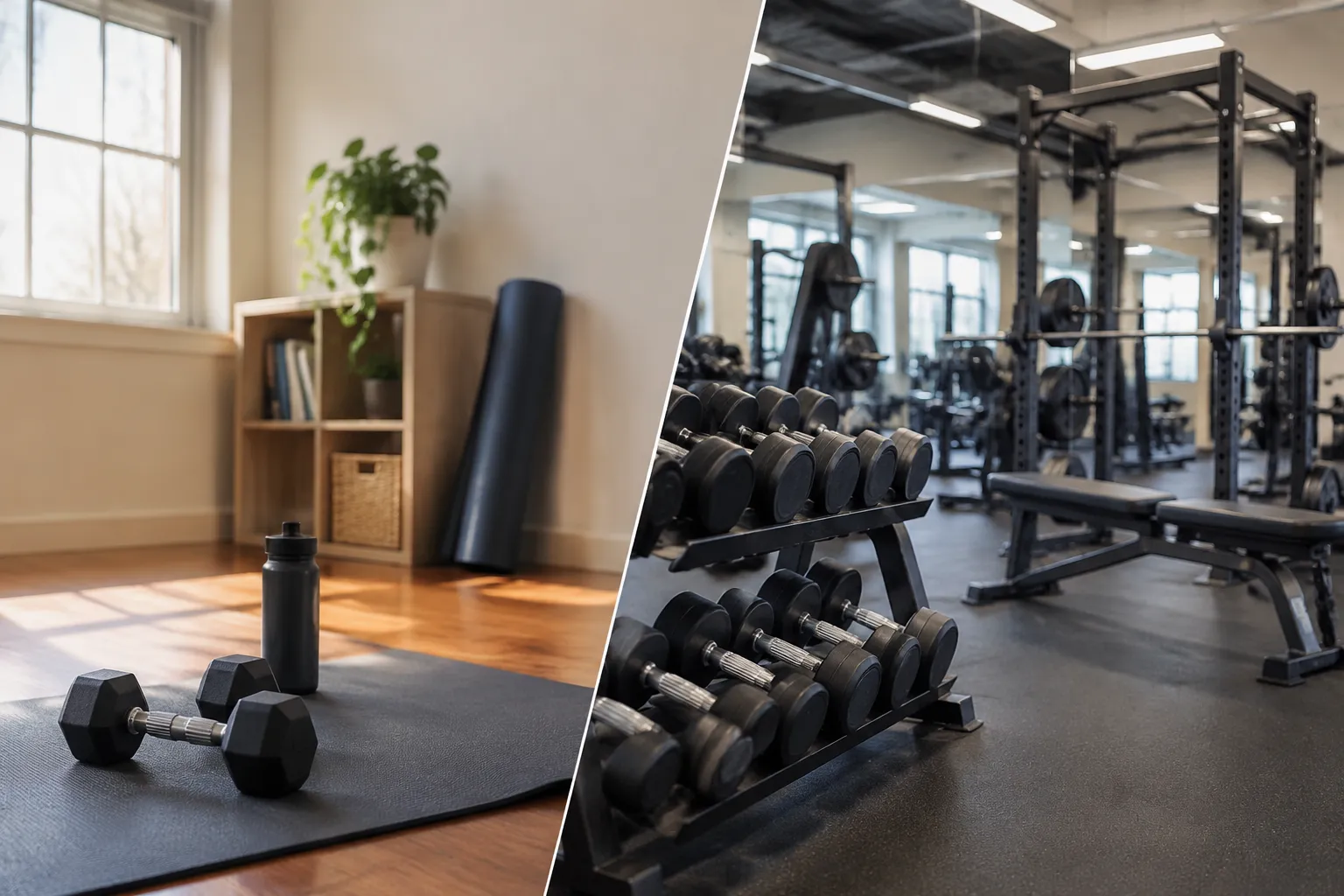
The squat rack costs about as much as eleven months of a mid-tier gym membership, and it will outlive every treadmill in that gym by a decade.

Gyms sell a story about strength: chrome bars, rubber plates, a mirror wide enough to check a bench press from three angles.

The home gym converts fastest in January. By the second week of February, the resistance bands are hanging on a hook in the garage and the yoga mat has been pressed into service as a dog bed.